


11 March 2026
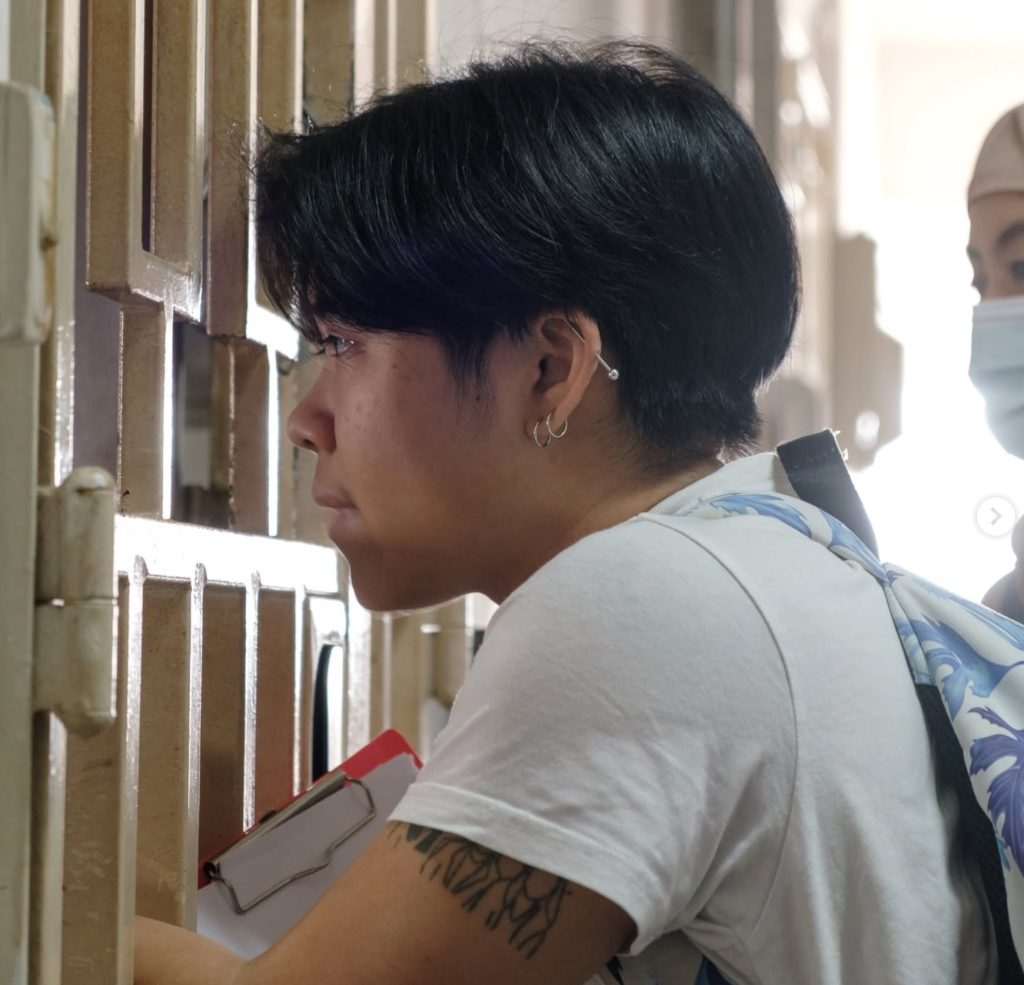
In 2025, the police were called on both the Transformative Justice Collective (TJC) and Student Actions for Transformative jUstice (SATU) for their door-knocking efforts. These incidents happened in May and September respectively, in Shanmugam and Lawrence Wong’s wards. In both cases, the police claimed that residents had called them to complain, despite our volunteers having had peaceful and consensual conversations with the residents they spoke to.
These were the first times that we’ve encountered issues with door-knocking, since TJC first started door-knocking activities in 2022. Since these encounters with the police, we’ve paused our door-knocking efforts.
We’re troubled that in an environment where we are denied the freedom of assembly, association, and expression in numerous ways, one of the only remaining ways for citizens to engage directly with each other on topics that matter to us is being closed off as well. Let’s look back at our history of door-knocking, and what we’ve gathered through talking to residents.
TJC started door knocking efforts in
AUGUST 2022
in a rental flat community in Ang Mo Kio, to collect signatures calling for a moratorium on the death penalty. It was also with the intention to engage in conversation with residents about their stories, values, and thoughts about Singapore’s carceral system.
We understand that the death penalty and criminisation disproportionately affect marginalised communities, which is why we’ve primarily visited rental flat neighbourhoods — as we felt they would resonate the most with the harms of policing, incarceration, and state violence.
Through these conversations, we’ve been able to stay grounded in the narratives that Singaporeans hold about drug users, drug trade workers, and the death penalty.
We’ve built community connection, civic engagement, as well as allowed residents to express their genuine opinions on policies and laws that dictate our society.
Additionally, we’ve connected residents to various support groups.

In total, we knocked on
925 DOORS
to have conversations with residents on the death penalty in Singapore.
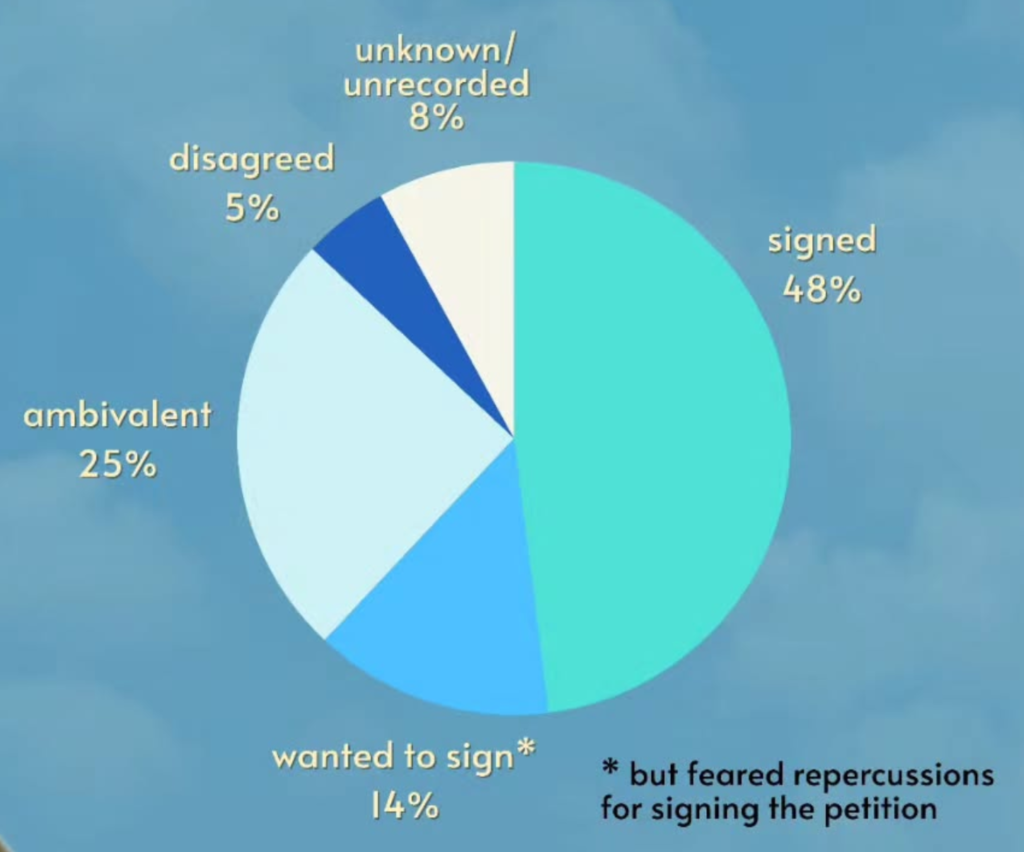
Of the 40% of residents who responded, 62% supported a moratorium on the death penalty, and only 5% explicitly disagreed.
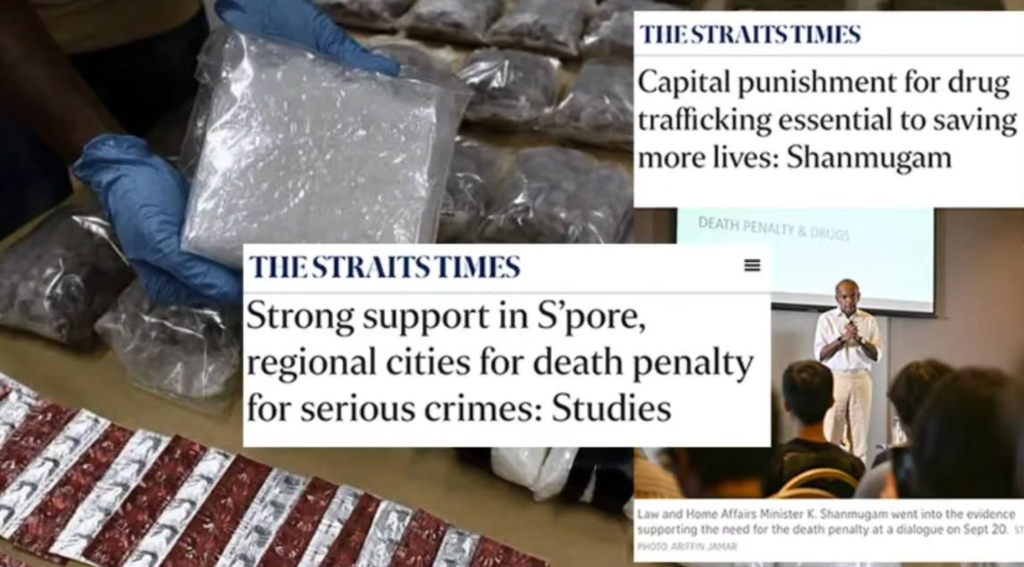
How do the results above square with these claims?
MHA’s 2023 survey of ~2000 residents found:
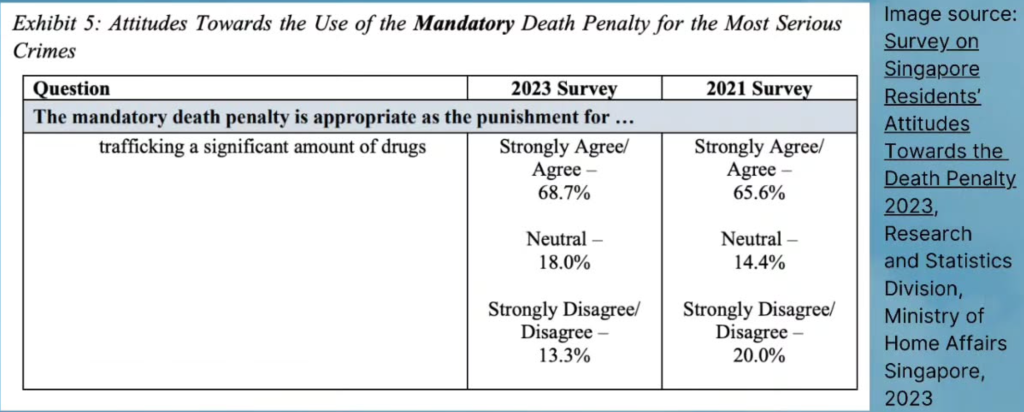
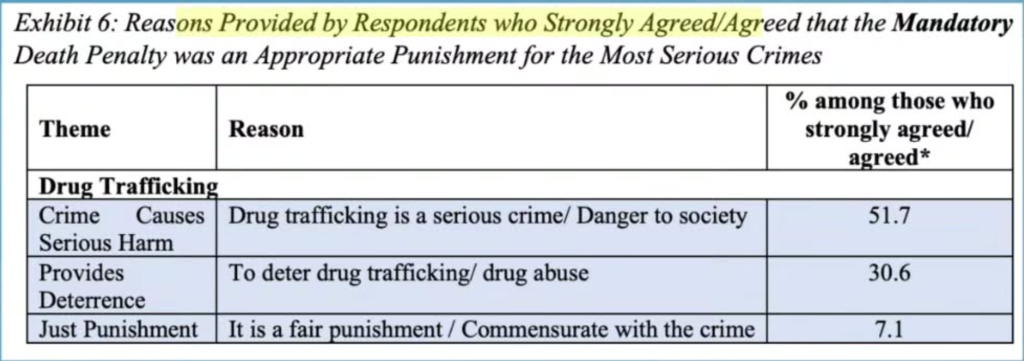
However, beyond just a survey, we had in-depth, organic conversations with residents. In fact, many residents were initially skeptical of our stance, citing the exact same reasons listed in Exhibit 6 of the MHA report. But many, after learning more about the realities of the death penalty regime, changed their minds.
Points like the legal presumptions relating to drug trafficking, the fact that the death penalty is mandatory and not discretionary, the devastating impact of capital punishment on inmates’ families and communities, and stories of inmates who found newfound purpose while on death row, were raised in our conversations.
Our experiences square with scholarly research findings that the more people understand about how the death penalty is applied, to whom, and in what specific cases, the less they support it.
This is also evident in a 2018 National University of Singapore (NUS) research paper, where it was found that the number of Singaporeans who supported the death penalty in effect, dropped substantially after being presented with case scenarios.
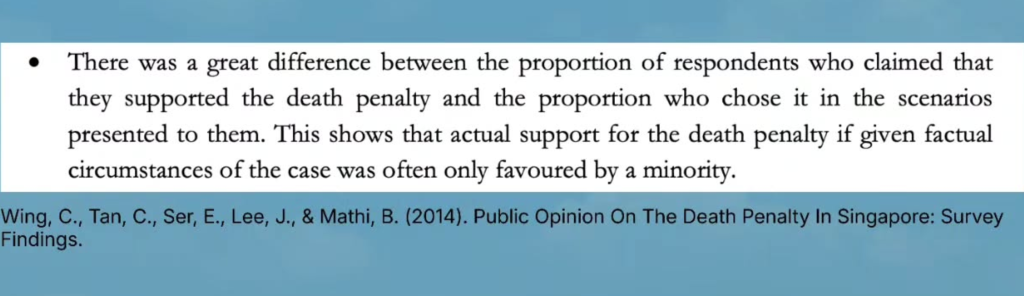
In this survey, only 5% of respondents who claimed to support the mandatory death penalty chose death for all the scenarios they were asked to judge.
We recognise that our sample size is small, but our experiences tell us that attitudes are not as straightforward or fixed as they seem.
It is more important now than ever that citizens are free to have these conversations on their own terms, to educate themselves, to inform each other, and to debate if the death penalty has a place in our society.
For abolitionists, door-knocking has always been an important way of understanding our communities’ views and what perspectives they have been denied access to.
Through conversations and reflections with residents, we’ve realized that most Singaporeans are not aware of how the death penalty operates — but when informed, they do not support it in the way the state tells us. This is why freedom of information is vital.
It is greatly unfortunate that our door-knocking efforts have been thwarted through police harassment. However, we will continue finding new and creative ways to listen to, educate, and engage with our fellow Singaporeans on the issues that matter deeply to us and concern our collective futures.
Goodbye to door-knocking!
…for now.